
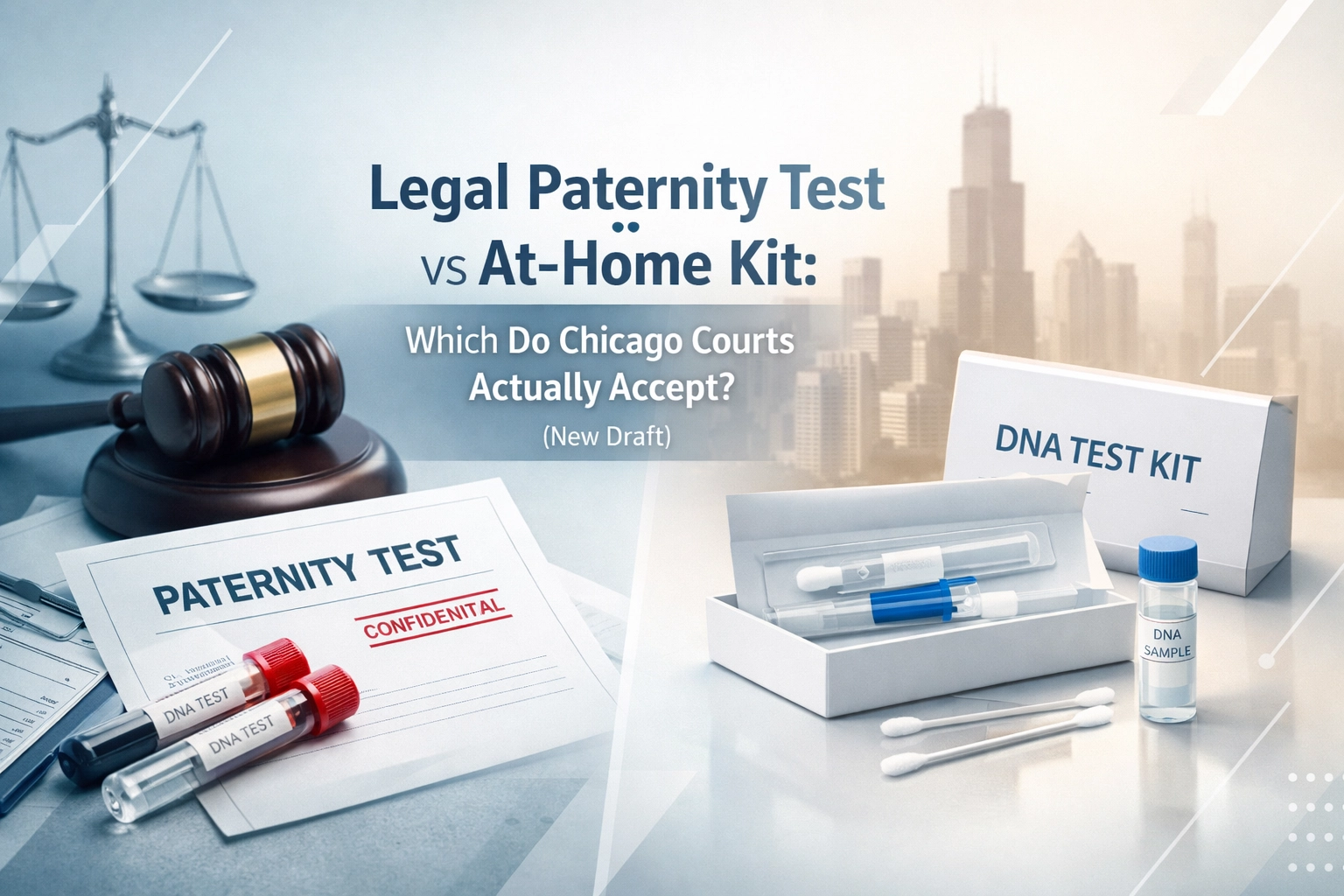
Legal Paternity Test vs At-Home Kit: Which Do Chicago Courts Actually Accept?
Published February 22, 2026
When you're facing a custody dispute, child support case, or inheritance claim in Chicago, understanding the difference between a legal paternity test and an at-home DNA kit isn't just helpful, it's essential, and this distinction can make or break your case in court. The realm of paternity testing has evolved significantly over the years, with at-home kits becoming increasingly accessible and affordable, yet Chicago courts maintain strict requirements about which test results they'll actually accept as valid legal evidence.
Chicago courts only accept legally admissible paternity tests performed by accredited laboratories with proper chain of custody documentation, which means that despite the convenience and privacy of at-home DNA kits, these tests simply won't hold up when you need to establish paternity for legal purposes such as child support, custody arrangements, or adding a father's name to a birth certificate. This sentiment is what makes understanding the legal requirements so critical for anyone navigating family law matters in Illinois, where the courts have established clear standards that must be met for DNA evidence to be considered valid.

What Makes a Paternity Test Legally Admissible in Chicago Courts
The legal paternity test differs from at-home kits in several fundamental ways, and these differences revolve around chain of custody, laboratory accreditation, and documentation protocols that ensure the integrity of the results. For a paternity test to be admissible in Chicago courts, it must be performed by an accredited laboratory that follows strict chain of custody procedures, meaning someone must witness the DNA sample collection to verify proper procedures, and the laboratory must document everything including IDs and photos of all participants.
Illinois courts require DNA test results to demonstrate at least a 99.9% probability of paternity to establish legal paternity, which signifies a near-certain biological relationship between the alleged father and child. The chain of custody documentation creates an unbroken paper trail from the moment samples are collected until the results are generated, ensuring that the samples tested actually came from the individuals in question and weren't tampered with or switched during the process.
"We needed legal proof for our custody case, and DNA Concierge Plus walked us through every step of getting a court-admissible test. The process was straightforward and professional."
Jennifer Martinez, Chicago Parent
Legally admissible tests serve as valid legal documents for life and can be used for child support purposes, custody cases, adding a father to a birth certificate, inheritance matters, and immigration proceedings. The accreditation typically comes from organizations like AABB (formerly the American Association of Blood Banks), which sets rigorous standards for relationship testing laboratories, and this accreditation ensures the laboratory maintains proper quality control measures and follows industry best practices.

Why At-Home DNA Kits Won't Work for Legal Matters
At-home paternity tests, while useful for personal knowledge and peace of mind, lack the chain of custody documentation and laboratory accreditation that courts require, which means these tests cannot be submitted as evidence in legal proceedings no matter how accurate the results might be. The fundamental issue isn't the testing technology itself, as many at-home kits use similar DNA analysis methods as legal tests, but rather the absence of witnessed collection and proper documentation that verifies who provided the samples.
When you order an at-home kit, you collect the DNA samples yourself in the privacy of your home, which creates an opportunity for sample switching or contamination that courts cannot overlook. There's no neutral third party present to verify that the alleged father actually provided his sample, or that the child's sample came from the child in question, and this lack of verification makes the results inadmissible regardless of what they show.
The realm of at-home testing serves a different purpose entirely, offering individuals the ability to explore questions about biological relationships privately and affordably before deciding whether to pursue legal action. These kits can be valuable for personal decision-making, family planning, or simply satisfying curiosity, but when legal matters are involved such as establishing child support obligations or custody rights, only a legally admissible test will suffice.
The Chain of Custody Process for Legal Paternity Tests
The chain of custody process begins with scheduling an appointment at an approved collection facility, where a trained collector will verify the identities of all participants through government-issued photo identification. The collector photographs each participant, records identifying information, and witnesses the sample collection process to ensure proper procedures are followed, creating documentation that can be presented in court if challenged.
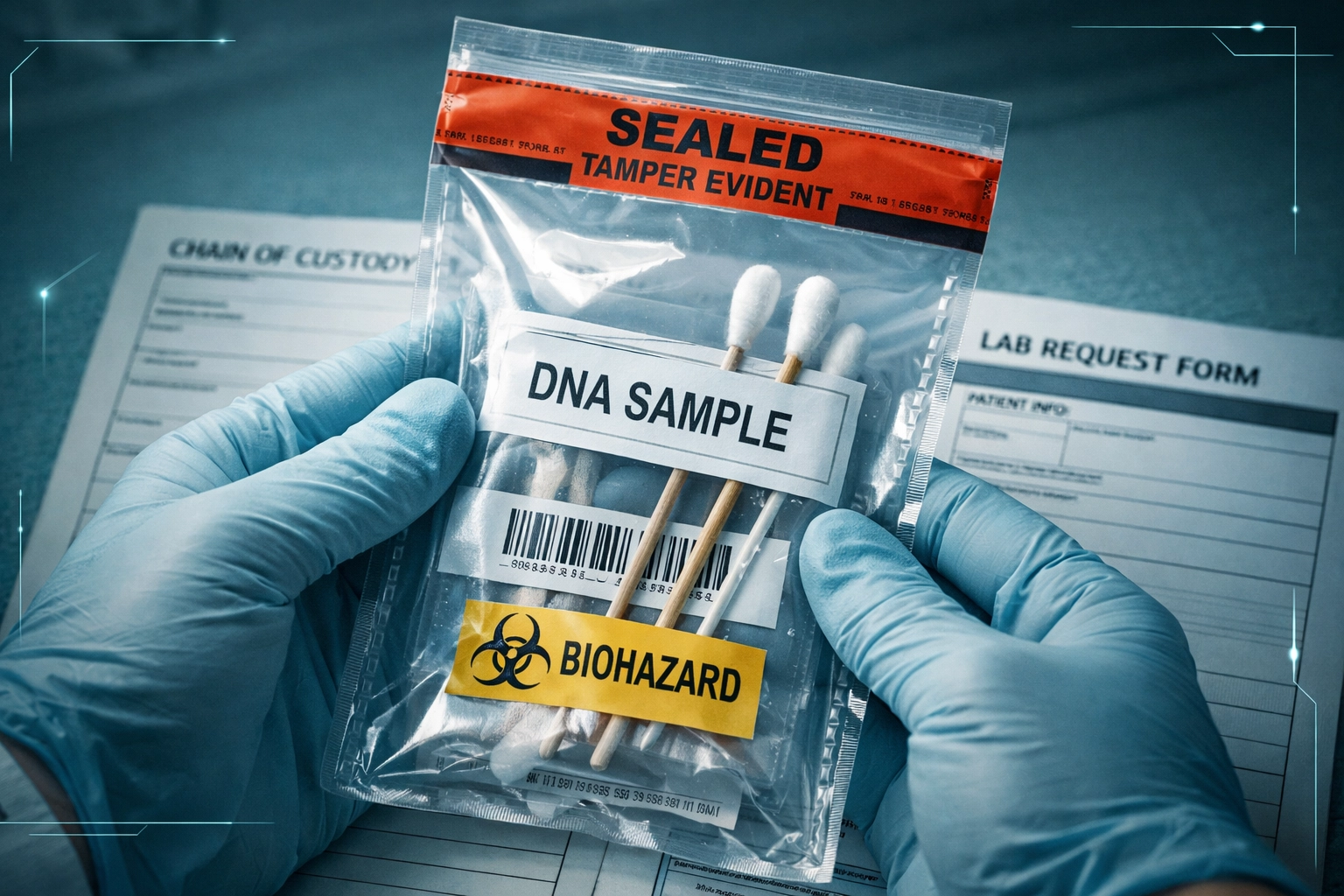
DNA samples are typically collected using buccal swabs, which involves rubbing the inside of the cheek to gather cells, and this process is quick, painless, and completely non-invasive for both adults and children. The collector seals the samples in tamper-evident packaging and maintains detailed records of who collected the samples, when they were collected, and how they were handled until they reached the laboratory for analysis.
Every person who handles the samples during the testing process signs documentation confirming they received and transferred the samples appropriately, which creates an unbroken chain from collection to results. This meticulous documentation process ensures that if the results are ever questioned in court, there's a complete record proving the samples' integrity throughout the entire testing process.
When You Need a Court-Admissible Test in Chicago
If a paternity case is initiated in Illinois, the court can order genetic testing to determine the biological father, and when the court issues such an order, you must obtain a legally admissible test that meets all chain of custody requirements. Situations that typically require court-admissible paternity testing include child support proceedings where the alleged father disputes paternity, custody battles where biological relationship must be established, adding a father's name to a birth certificate when there's disagreement, inheritance claims by children seeking to prove biological relationship to a deceased father, and immigration cases requiring proof of biological relationship.

If both parents voluntarily agree on paternity and sign a Voluntary Acknowledgement of Paternity form, a DNA test may not be necessary, but genetic testing becomes crucial when there's a dispute about who the father is. Many people discover they need a legal test after initially obtaining an at-home kit, realizing too late that their results won't be accepted by the court, which means they must pay for testing twice and potentially delay their legal proceedings.
Understanding which type of test you need before collecting samples can save time, money, and frustration, especially when legal deadlines are involved in family court matters. DNA Concierge Plus specializes in providing court-admissible paternity testing that meets all Illinois legal requirements, with collection facilities throughout the Chicago area that make the process convenient and accessible.
How Long Does Legal Paternity Testing Take
The timeline for legal paternity testing typically involves scheduling a collection appointment within a few days, with the actual sample collection taking only about 15 minutes at the facility. Once samples are collected and sent to the laboratory, results are generally available within 3-5 business days, though expedited options may be available for urgent legal matters requiring faster turnaround.
The laboratory analyzes multiple genetic markers to calculate the probability of paternity, comparing the child's DNA profile with the alleged father's profile to determine whether a biological relationship exists. When the results show at least 99.9% probability of paternity, this meets the threshold required by Illinois courts to establish legal paternity, and when the results show 0% probability, this excludes the alleged father as the biological parent.

Getting Started with Court-Admissible Paternity Testing
If you need a paternity test for legal purposes in Chicago, the first step is contacting an accredited testing provider that offers chain of custody testing and can direct you to an approved collection facility. DNA Concierge Plus provides comprehensive support throughout the testing process, from scheduling your appointment to receiving your certified results that can be submitted directly to the court.
The cost of legal paternity testing is generally higher than at-home kits due to the additional chain of custody documentation and witnessed collection requirements, but this investment ensures your results will be accepted by Chicago courts and can serve as legal proof of biological relationship. Many testing providers offer payment plans or accept court orders that may provide payment assistance, making legal testing accessible even when finances are tight.
Whether you're establishing paternity for child support purposes, resolving custody disputes, or addressing inheritance matters, obtaining a court-admissible paternity test from an accredited laboratory ensures your results will hold up under legal scrutiny. Welcome to the world of legally admissible DNA testing, where proper procedures and documentation make all the difference in protecting your legal rights and establishing biological relationships that courts will recognize.
For more information about court-admissible paternity testing in Chicago or to schedule your appointment, contact DNA Concierge Plus today and let our experienced team guide you through the process with professionalism and care.